
On Ecology
By Claudio Mazzucco (Imperator of AMORC) | Jun 09, 2023
This is an extract from The Rosicrucian #85 (Aug 2021)
A few moments before starting to write this message, as I gazed out through the window of my office in the Italian Grand Lodge, here at Ornano Grande…, I saw the garden just prepared by one of our volunteer fratres. A simple hint from me on the advisability of having a small vegetable garden was enough for the frater and a soror, also always very present, to prepare the land, bring the small plants and arrange them in order on the small furrows. But what I want to talk about today, and reflect upon with you, is not the vegetable produce of the Grand Lodge, but how nature can reveal its intrinsic order to us; an order of which we are a part, and which we, as Rosicrucians, refer to as “the Cosmic”…, and how ignoring this order has generated, among other things, the environmental problems we are witnessing. It is interesting to note how the word “Cosmic” stems from the original Greek word “Kosmos” meaning not only ‘order’ but a form of order that has a form of beauty in it too.
Looking out from above (my office is on the second floor;) I was able to clearly appreciate how the Vital Life Force impregnates the planet and feeds life. Those plants that I now see in the garden are the result of processes fundamentally linked to photosynthesis. It is a wonderful way, created by nature, to imprison and use the positive energy radiated by the sun on our planet in the plant world. But if we looked with a lens on that small piece of land, where the various vegetables will now grow, we could see a multitude of other living creatures, especially bacteria, but also insects and worms of various kinds. A living network with its own life processes…, interconnected in a harmonious whole. And, if I widen my gaze beyond our garden, towards the hills, the perception is clear: Life is spread over the entire surface of our planet, making it finally similar to a living being; a living planet or Gaia, as it was defined by the English chemist James Lovelock referring to the myth of Gaia. And as a living being, our planet has found its homeostatic equilibrium through an infinity of processes that are all interconnected.
...As a 'living being', our planer has found is homeostatic equilibrium through an infinity of processes that are all interconnected.
As an example of how the planet is made up of infinite processes that guarantee the maintenance of a balance such as, for example, the percentage of oxygen in the atmosphere or the average temperature, think of this cycle that I will now illustrate: siliceous rocks like granites and basalts, are decomposed by fungi, bacteria, and lichens, thus releasing the calcium and silicon of which they are composed. With the carbon dioxide (CO2) present in the air, carbonates are formed, which are the main component of the structure of micro-algae and shells. When these algae and shells die, they fall to the bottom of the sea and form thick layers of carbonates. The tectonic plates then push these carbonates into the depths of the earth, where the temperature is very high. Finally, with this intense temperature, these carbonates decompose again, thereby producing the initial carbon dioxide expelled from the volcanoes. Having returned to the atmosphere from where it came, the whole cycle starts again.

Observing all this life and these processes impregnating the soil, air and water of our planet, we realise that we are one of the results of this process. The atoms of which we are composed were generated shortly after the first moments of the Big Bang, corresponding to thousands and thousands of years from the beginning of the universe. And after a long journey of billions of years, these atoms formed our Planet about 4½ billion years ago. Then, following infinite combinations still not completely scientifically clear, the first living forms appeared around 3.7 to 3.8 billion years ago. Then multicellular organisms surfaced around 700 million years ago. The story of the appearance of our species on the planet is still being written. There are still paleontological and archaeological researches in progress that find skeletons of those who were the progenitors of the human species. But for the moment, we can say that about 3.2 million years ago, with the skeleton of Lucy, there existed a female hominid which walked erect. Finally, present humans emerged roughly 200,000 years ago.
Regarding the appearance of life on the planet, the discussion is still very heated. There are biologists and chemists who claim that it is the result of random combinations, a thesis supported by the famous book (Chance and Necessity) of the 1960’s by the French biologist Jacques Monod. There are other scientists who have a very different idea. British mathematician, physicist, and astronomer Fred Hoyle (1915-2001) used a brilliant and provocative analogy to explain that the mere probability of a chance meeting of molecules is not enough to explain life. He says such a chance encounter would be tantamount to a hurricane hitting an old iron landfill and producing a fully functional Boeing 747.
We are a bridge of passage of atoms that have belonged to comets, stars and nebulae, who knows...
We are formed from those same atoms born from the Big Bang and from others generated subsequently as a result of nuclear reactions in the various stars of the universe. These atoms are re-integrated into our body through nutrition and breathing because “we lose atoms all the time.” We are a bridge of passage of atoms that have belonged to comets, stars and nebulae, who knows…, and which now form plants, like the ones I am looking at, and my own body with its brain that looks. Atoms looking at atoms! In the cells of my brain, which I now use to write this message, there are atoms that have belonged to the earth, to some bacterium, to some insect, or even animal, to the water that evaporated from the sea, has travelled thousands of kilometres in the clouds to then fall in the form of rain, in a vital circle that connects all living species to the planet. The writer Primo Levi wrote a beautiful text on the history of the Periodic Table of the elements and the carbon atom, one of the atoms at the basis of life, illustrating the saga of this atom in an almost poetic way.
Observing this vital process makes us perceive how we are the part of the planet that thinks, feels, imagines and dreams. We are the planet, and this is an indisputable truth, although we have, most of the time, the perception of being something different and separate from it. In fact, with a certain presumption, we also consider ourselves superior to the rest of living beings while, in reality, our life is intimately associated with that of all the other species of this planet and with the planet itself. Somehow, the Earth has generated us in the same way that our mother has generated us. This has caused many civilisations to refer to our planet as “Mother Earth.”
The ecology discourse of today has become of great importance, practically an emergency, even if we know that there cannot be a true ecological thought without a corresponding expansion of consciousness. In other words, it is one thing to make an ecological discourse well-founded from a philosophical and scientific point of view; it is quite another to live and feel according to what one claims to know. And this is perhaps the drama of the human experience on our planet. Many now rationally understand our link with it and with the life it contains, but, from here, to develop a renewed ethics, there is an abyss that can only be overcome through the experience of a ‘spiritual nature.’
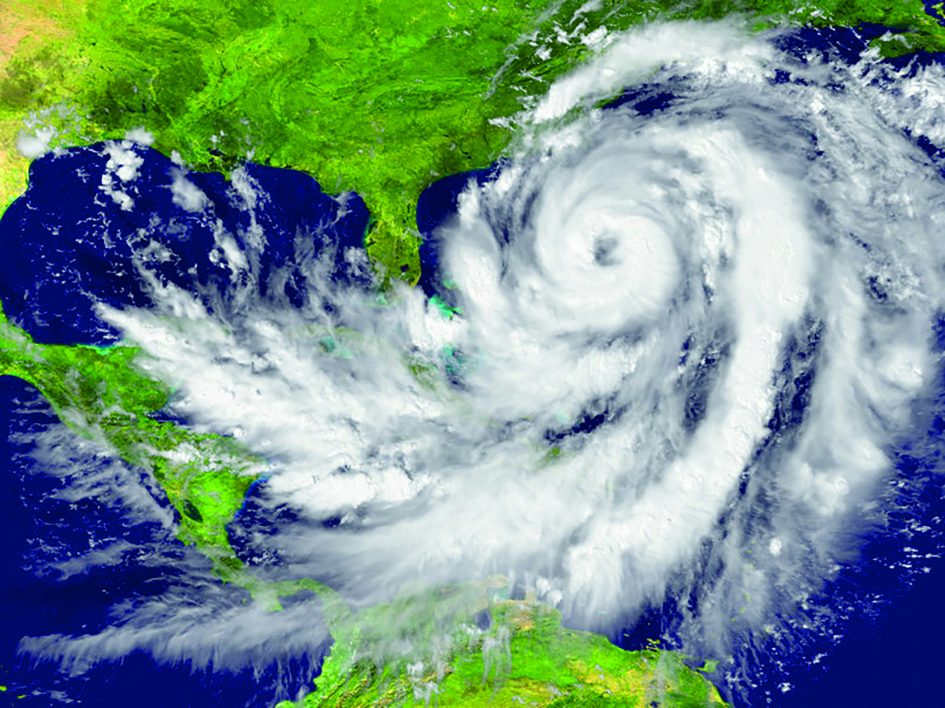
The ecology discourse of today has become of great importance, practically an emergency...
When I use the word spiritual, I mean an integral, complete, marking and transforming experience. An experience of such a scope that once a person has experienced it, they no longer return to being as they were before, and it shows from the way they live. The person continues to do the same things they did before, but not as they did before. It is not necessarily an experience of a religious nature in the common sense of the term, because the spiritual experience precedes the religious one. It can certainly also happen through religion, but it is not the prerogative of any religion to produce it. A deep immersion in an artistic work, or being absorbed by a scientific problem, can equally generate the conditions for having this experience.
Our teachings aim to expand human consciousness by expanding its vision to ever greater dimensions of reality.
Do you not find it extraordinary, or rather amazing, namely, something that arouses both a sense of wonder and amazement…, that we are this particular agglomeration of atoms, that in some way thinks, studies, experiments and experiences emotions; and that it now raises the matter of how all these atoms, in this arrangement that is us…, are capable of producing thought? But will an atom or a group of atoms ever produce thought alone, or will it be necessary to add some other non-material element for this purpose? Hermann Joseph Muller, 1946 Nobel Prize winner in Physiology, wrote:
“To say that man is made up of certain elements is a satisfactory description only for those who intend to use him as fertiliser.”
And what other human experience could ever connect the scientific knowledge we have now reached of this whole process to its deepest and most transcendent meaning if not the mystical experience? It is an experience that by its nature produces a sense of wholeness, of belonging to a Reality that overwhelms, is beyond all who experience it, but at the same time feel that they belong. Called the ‘Oceanic Sentiment’ by the 1915 Nobel Prize winner for literature Romain Rolland…, ‘Cosmic Consciousness’ by the Canadian psychiatrist Richard Maurice Bucke…, the Tao by the philosopher Lao Tsu…, and the ‘Order of Nature’ by the 1932 Nobel Prize winning physicist Werner Heisenberg.

We Rosicrucians have in our heritage the commitment and tools needed to create the conditions necessary for people to experience moments of harmony that allow them to experience this ‘mystical experience’ at different intensities. Our teachings aim to expand human consciousness by expanding its vision to ever greater dimensions of reality. They are not intended to prepare us merely to make ‘good speeches.’ The time for speeches is now over. Furthermore, these teachings are obviously not a path for free hours or a system for obtaining powers of any kind. They are not an activity reserved for those who remain closed in their room and which ceases when they leave it to live their day. Rather, they are a new way of understanding life through various experiences, thereby developing new attitudes towards the events that compose it.
Let me recall in this reflection an important aspect of the mystical or spiritual experience relating to the moral sense. The word moral here should not be understood as a set of rules imposed perhaps by a religious culture or by social conventions. Rules which take no account of reality, and which are seldom respected by those who propose them, become more properly what we call moralism.
The moral sense here must be understood as the act of listening to the voice of conscience manifesting itself in the inner silence…, making us perceive, time after time, to do what is right, engaging in ‘right action’ so our existence benefits not only us, but also the lives of all creatures who share the environment with us. Let me quote the Italian philosopher Vito Mancuso:
“It feels like an indistinct but real call, and we are fascinated by it. And when we say yes to this mysterious call, we tend [to move] in its direction; and this sweet tension within us is called ethics.”
This lack of listening is the tragedy of our experience as humans. Our particular deafness is much more than a simple hearing loss, it is a generalised drying up of perception today is stimulated by such violent and aggressive impulses that it then tends to no longer be sensitive to that subtle ‘still small voice’ speaking within us when the conditions are propitious. The moral sense is that inner voice dictating to us rules of behaviour we could never transgress even if we were alone and no one could see us. It is a sense that gives to the life of individuals a refined quality to the extent that it removes them from vile, vulgar, dishonest, selfish behaviours, and at the same time elevating them towards the perception of the harmony of nature and empathy towards living beings, inviting them to act with benevolence and justice. And this action is the foundation of true environmentalist thought.
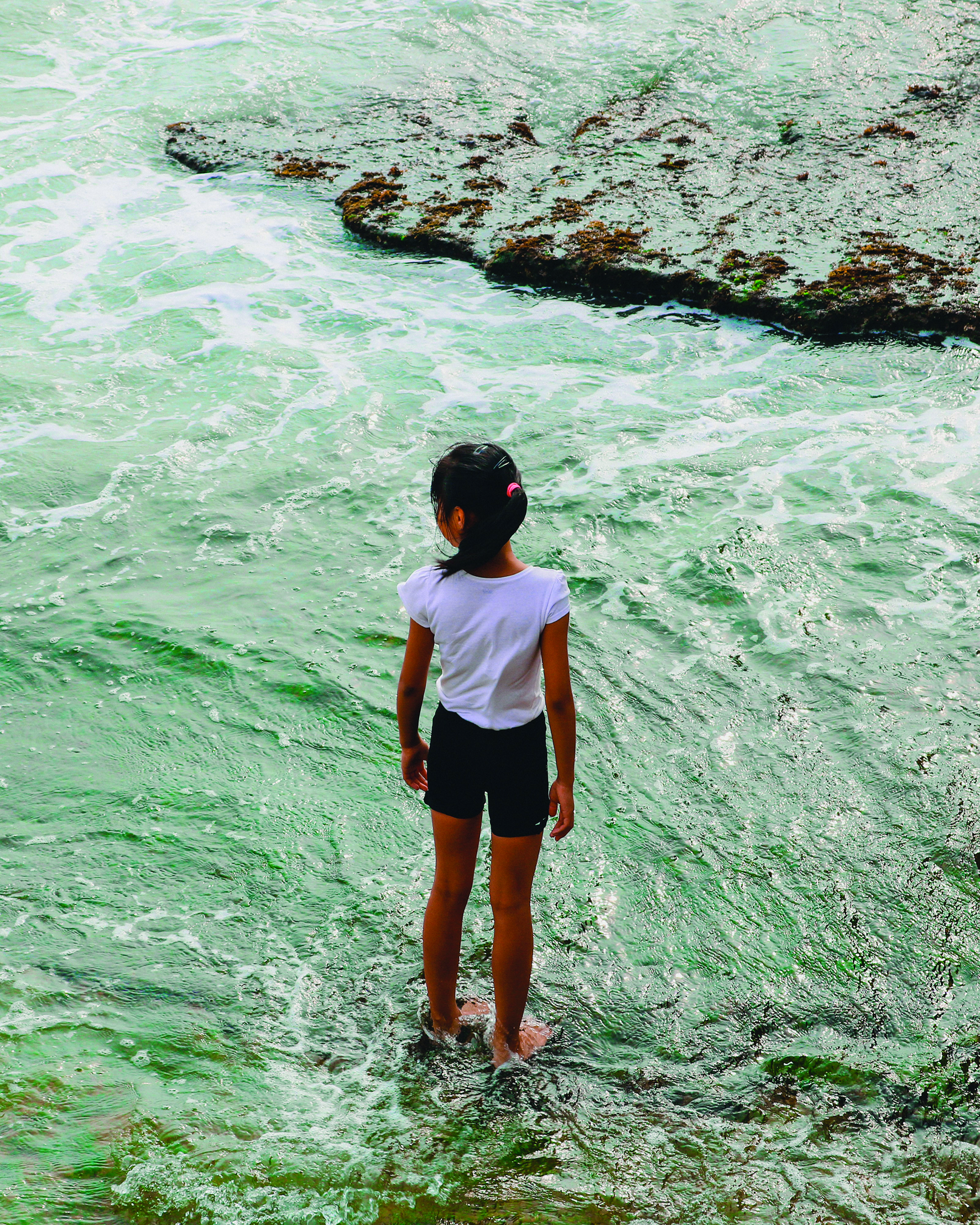
...we might ask ourselves if the moral sense can be developed, or if it is innate in humans
At this point, we might ask ourselves if the moral sense can be developed, or if it is innate in humans. This important question has accompanied many philosophers throughout the history of human thought, and today it is also a topic of study in neuroscience. This is because, on simple observation, we can conclude that some people appear to be totally lacking such a moral sense, while others manifest very high and refined degrees of it. From the Rosicrucian point of view, this meaning corresponds precisely to what we call ‘spiritual evolution.’ Indeed, it is a condition not characterised by the presence of extraordinary powers in individuals (although some may exist), but by a capacity for profound discernment, a refined moral sense and a high degree of empathy. It is a condition that can be achieved progressively, but which often appears fragile and at risk of being lost under the influence of the ego. In fact, its absence is easily recognisable because, despite the possible economic success of certain people, their failure as a humans will always stand out.
According to Rosicrucian thought, this evolution is one of the potentialities of the human being. We have an unshakable trust in it and channel our energies to favour the creation of the conditions in which everyone can experience, even if for a few moments, this voice within themselves.
“As we often say, civilisation is not a simple improvement of the environment in which humans live, or where they have easier access to material resources. It is also the perfecting of oneself, of the individual.” -- Ralph Maxwell Lewis
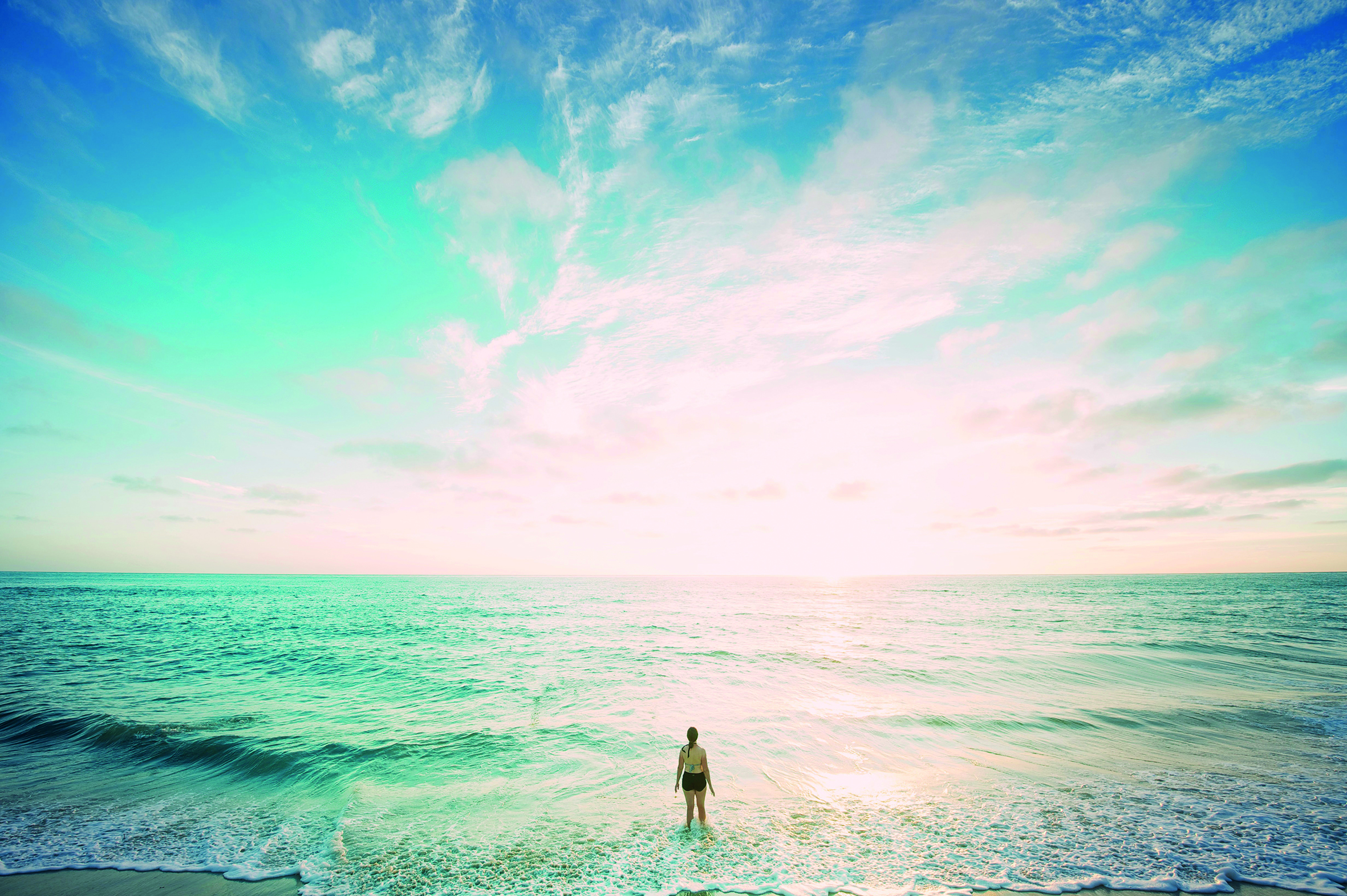
We are the sea, we merge with it, but we are also the blue sky above us and the sand below us.
In order not to remain on the theoretical level when we talk about a spiritual or mystical experience, I invite you to recall an experience that you will most likely have lived. You will certainly have tried, perhaps when you were a child, the experience of being carried away by the waves of the sea towards the beach. A bit like a surfer does, but without the surfboard, letting themselves be carried away by the flow of the wave. Or even just to be lulled by the waves before they break. In those precise moments in which we are dragged by the current, we experience a sensation of pleasure that cannot be described. There is no difference between us and the sea, and while we are being dragged, we only feel the desire, the deep desire, that the experience will not end, that the wave will drag us as much as possible.
Experiencing the sea is too global, too mystical, to be reduced to an intersubjective interaction.
The water touches our whole body with gurgling caresses, and we have a feeling of being the sea itself, because we temporarily lose our perception of the physical limits of our body. We are the sea, we merge with it, but we are also the blue sky above us and the sand below us. It is a mixture of impressions that generates a perception of unity marked by a sense of happiness and a desire for it never to end, to last as long as possible.
Well, perhaps this is an experience that in its childlike simplicity can suggest what is described by mystics of all ages, and which constitutes the initiatory experience par excellence, our spiritual destiny: to experience Unity. And like the wave that arrives on the beach and then disappears and becomes the sea again…, perhaps we too, in this experience of union with the Whole, will feel that we have always been in the Cosmic, thereby rediscovering our own eternity.
“Experiencing the sea is too global, too mystical, to be reduced to an intersubjective interaction. There is an essential difference between an intersubjective interaction, which takes place in a cultural space, and what one feels when one is alone at sea under a starry sky, moved by the splendour and immensity of the cosmos, with the feeling of being completely immersed in this global space, without being able to do anything but take part in it, without being able to find the words to describe it. At sea, I am no longer myself, I am the Cosmos.” -- H. Laborit (Biologist)