
The Benevolent Dandelion
By Jack Coggins | May 30, 2023
This is an extract taken from The Rosicrucian #87 (Feb 2022).
NATURE in its wisdom made the dandelion one of the most abundant of all herbs. The temperate and cold regions of both hemispheres are its habitat: Europe, Central Asia, North America, the Arctic and southern temperate areas. We find them everywhere: in meadows, fields and lawns, along roadsides and pavements, and, almost any other place not shaded from the sun.
The dandelion is nearly impossible to eradicate. Anyone who has tried to remove a dandelion from their lawn must have thought that nature erred by allowing this ‘nuisance weed’ to overrun almost the entire populated world. Still, it exists, so there must be a special purpose for the lowly dandelion. In reality, it is a veritable ruler in the plant world, for it belongs to the composite family, the Compositae or Asteraceae, making up around 1,100 genera and more than 20,000 species, including the dandelion, daisy, lettuce and marigold, to name just the most well-known. Plants from the composite family are Eudicots and are considered to be the most highly evolved of all plants. I hope that this article will give you added respect for the humble dandelion.
As Food
In times of need, food is where you find it. Since the dandelion is found almost everywhere, it is one of Nature’s means of assuring a constant food supply for humans, animals, birds and even bees. Actually, its scientific name, Taraxacum, is an Arabian version of the Greek word, Trogemon, meaning edible. Once, when insects destroyed the entire harvest on the island of Menorca, the inhabitants lived on dandelion roots instead of their customary bread. Still, as a nourishing food, in many countries it has for centuries been wisely employed as a food source.
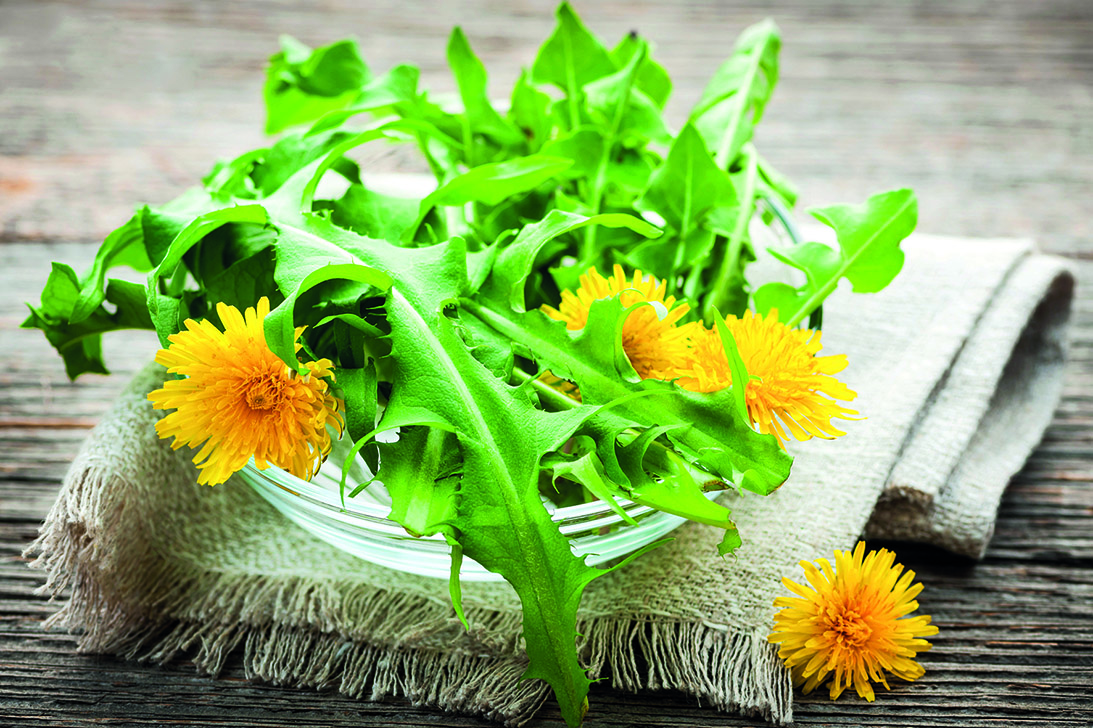
Both wild and cultivated varieties are used. The young, tender leaves, abounding in vitamins and minerals, are excellent for making delicious green salads. Often they are cooked like spinach and served with butter or vinegar; mixed with other greens they are less bitter-tasting. Also, finely chopped dandelion leaves can be used in sandwiches. Here are some reasons why it might pay us nutrition-wise to include dandelion in our daily intake of food:
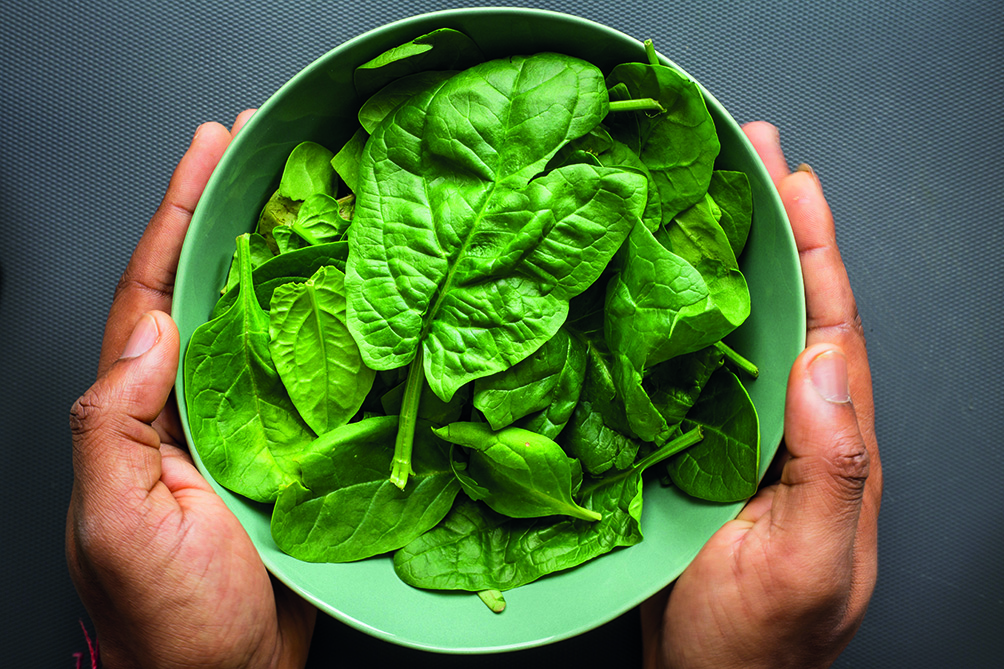
In an experiment for the U.S. Department of Agriculture, H. B. Stiebling discovered that, of those plants tested, the least iron was found in melons and apples. Dandelion, watercress and spinach contained the most. Iron helps ward off tiredness and breathlessness. It is an all-important factor in the manufacture of red blood cells, which carry oxygen to vitalise tissue and help carry off waste carbon dioxide. It is well known that iron deficiency is a major health problem throughout the world. It is estimated that between 10 and 25 percent of people in the West who are admitted into hospitals have insufficient amounts of this vital, vitalising mineral. And in poorer countries, where food is less abundant, the percentages are higher.
Simple anaemia is the medical term meaning inadequate amounts of iron in the body-system. Established cases should always be given medical treatment, of course. When we eat dandelion for a source of required iron, however, we are taking a definite step toward preventing the debilitating symptoms of anaemia. We are also enabling our bodies to make use of the wonderful energies we associate with oxygen, energies that keep us healthy, vibrant and active.
Iron is also directly related to the proper functioning of plant chlorophyll which, in conjunction with light, manufactures the plant’s food supply. When a plant is deprived of adequate iron, its leaves turn abnormally yellow and its value as human food degenerates. It is logical, therefore, to believe that when iron content is high, as in the dandelion, there will be a superabundance of plant food that will become human nourishment when assimilated.
Dandelion, watercress and spinach contain high amounts of iron
Another reason for the high vitamin and mineral content of dandelion may be its long, tapering taproot which often penetrates deeply into the earth. Experiments indicate that some plants absorb minerals from different soil levels. The peanut, for example, absorbs calcium near the surface; other minerals are taken in at deeper points. The dandelion’s long taproot naturally gives it access to more elements and may very well enhance its absorption of them, especially those that can be obtained best from deeper levels.
The root itself is a unique form of food. Sliced, it is a tasty contribution to salad. It is also used to flavour soups and stews and to make broth. When fried like parsnips the roots should be young and succulent and gathered preferably in winter when their ordinarily bitter sap becomes thick and sweet. Other uses for the root include the making of a health drink and as an adulterant for coffee. For these purposes, the root is dried, ground and usually roasted. It affects the flavour of coffee much in the same way as chicory.
There are numerous reasons for the belief that dandelion roots are uncommonly nourishing to humans. For one thing, they are the storehouse for energy that enables the dandelion to make its early appearance each spring. This energy-material is manufactured during one growing season, saved throughout the winter, and then used the following spring for early flower-production. For this reason, it is generally believed that dandelion roots are a double-charged source of human nutrition. Greek mythology relates that Theseus, who had energy and strength to slay both the bull of Marathon and the monstrous Minotaur, was fed this food by Hecate, the moon-goddess.
Called by some modern scientists “a weird substance” this food is neither starch nor sugar. In many respects it is like both; for, although it possesses characteristics of starch, it is still soluble like sugar. It is readily transformed into fructose, a form of sugar. Actually, every part of the dandelion plant can be eaten for food and is considered a tonic as well as nutritious. Even the flowers are used to make wine, or they may be added to any salad to beautify and to increase food value.
Medicinal Qualities
Dandelion is also used in medicine as (1) a means to increase the secretion and discharge of urine from the body, (2) a strengthener of the stomach, (3) a promoter of the discharge of bile from the system. It is excellent for the prevention and cure of scurvy, which is caused essentially by a lack of vitamin C. Dandelion is considered one of the safest and most useful herbs for liver malfunctions. It is also thought to be valuable to the heart.
A Dutch physician and chemist, Hermann Boerhaave (1668-1738), claimed that daily eating of dandelion will remove the severest and most obstinate obstructions of the viscera. This is also a very old remedy for curing indigestion when caused by a torpid liver. In her book, Green Medicine, C. F. Leyel states that dandelion as part of the diet can dissolve chalky deposits symptomatic of rheumatoid arthritis.
According to the Macmillan Medical Encyclopaedia, the fresh milky substance in the flower stalks is used for the treatment of warts. Generally, the beneficial actions of dandelion are described as (1) alterative, changing for the better, (2) aperients, mildly laxative, (3) hepatic, increasing bile secretion, (4) stimulant, increasing organ activity, (5) diuretic, aiding in secretion of urine, (6) tonic, strengthener.
Naturally, the wisest way to use dandelion for medicine is preventatively, that is, by eating it in small amounts daily, for its valuable health factors, before we have any specific need.
Industrial Value
Acting as food and medicine does not end dandelion’s valuable services to us. It has also met the needs of modern production. In Russia and Argentina, for example, dandelions of a particular variety were cultivated for their latex, which was made into rubber. In silk-producing countries, dandelion leaves are sometimes substituted for mulberry leaves as food for silkworms.
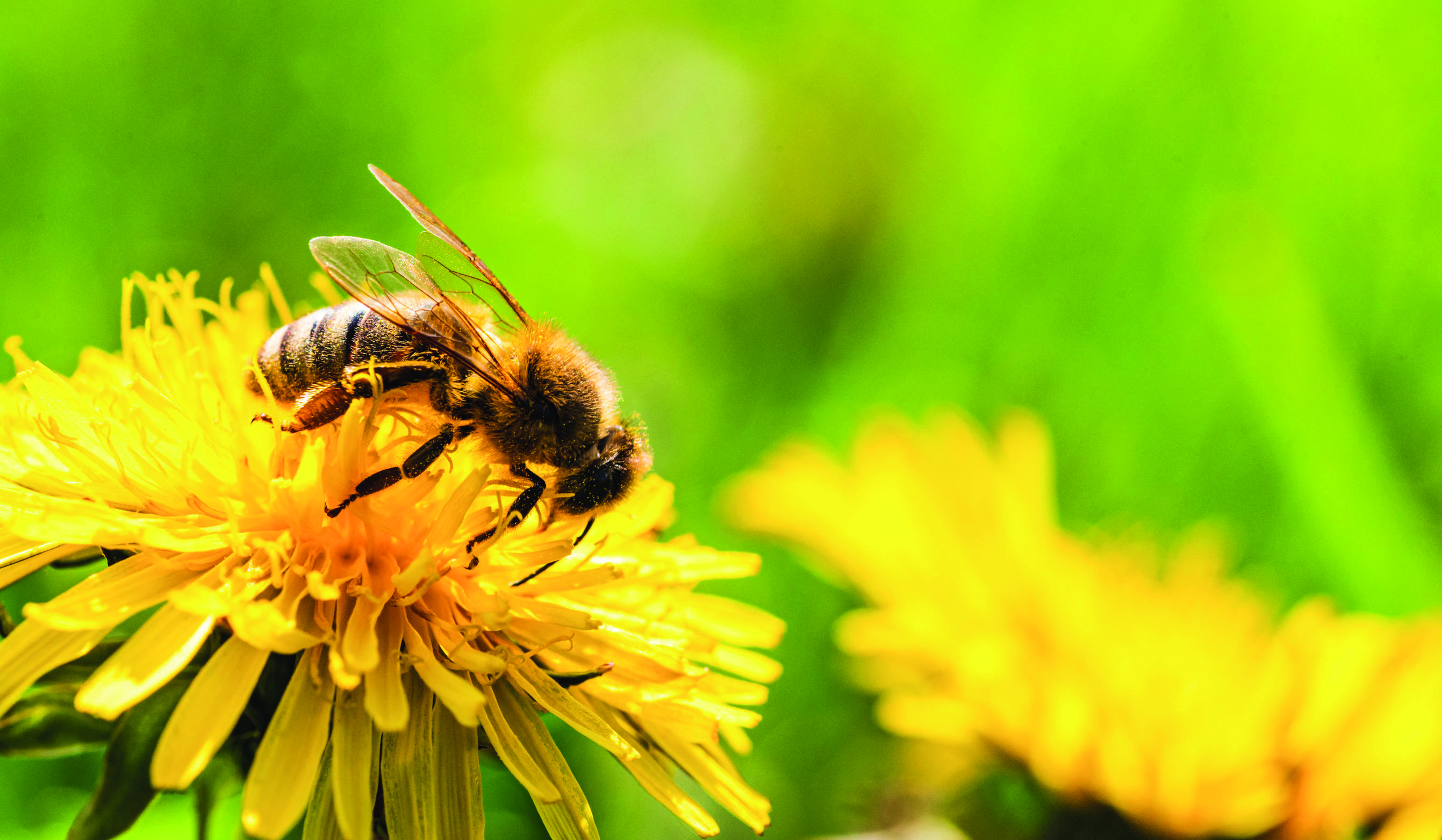
Probably one of the most important but little-known functions of the dandelion is that it supplies large amounts of nectar and pollen to bees during the crucial time when they are rearing their brood. For this reason, its appearance in early spring is of the greatest importance to beekeepers and the honey industry.
Above Duality
In a plant contributing so much to human welfare, yet appearing so unpromising, it is not surprising that we find a set of unique characteristics. For instance, the dandelion has given up sex altogether. Its ovaries are in no way fertilised; every fruit and every new generation are wholly products of virgin birth. Without sexual processes there can be, of course, no mixing of hereditary factors. Therefore, scientists tell us that in a hundred million years from now the dandelion will be very much the same as it is today. Nature has, in essence, said to the dandelion: “You are fine as you are. There is no need for any change or improvement. I’m satisfied!” She shows every evidence of seeing to it that her perfect plant survives too.
One of the most important functions of the dandelion is that it supplies large amounts of nectar and pollen to bees.
Many kinds of other plants, for example, would vanish if the wind or insects which carry fertilising pollen were suddenly not available. The dandelion, being sexless, requires neither one for reproducing itself. Slicing off the leaves just beneath the earth’s surface in an attempt to destroy the plant merely encourages it to grow. Nature seems to have tried to make it as independent of outside factors as possible. Even its seed distribution is largely autonomous.
The flower, which is really not a single flower but many tiny flowers, develops into the commonly-known blow ball. These are very beautiful, but they serve a more practical purpose. If you take one apart carefully and examine it, you will observe that it is composed of many individual parachute-like parts. There is a sort of shaft with a tiny fruit at one end and tufts of hair at the other. Each fruit contains one seed which is sometimes carried for miles in the wind by its tiny, natural parachute. The slightest breeze gives it motive power. Most plant seeds simply drop to the ground, but the self-sufficient dandelion gets around on its own.
Even its long taproot seems intentionally designed to give it additional hold upon the earth. Many have despaired of ever completely removing it from their lawns. Even when the lawn fails, the dandelions continue and thrive. The truth is, this humble plant is better prepared to survive than we are! We may not have unravelled the whole mystery wound up in the common dandelion. One thing, however, is certain: this meek-looking citizen of the plant kingdom has truly inherited the earth!