

The Philosophy of Peace
By Ralph M Lewis | Feb 13, 2023
This is an extract from The Rosicrucian #91 (Feb, 2023).
Throughout the world, the demands for widespread cooperation among nations continues. But before people can live and work in harmony, they must have a common understanding. Physically and organically people have much in common. Mostly, they react alike to the external forces of the environment. We know that the primary qualities of sense impressions are almost identical among all humans. We all know and have a commonality in our experiences of cold and damp conditions. We also have a commonality in our experiences of warm and dry conditions. And we also have a common experience when it comes to the extension of space, namely, the perception of the three dimensions of length, breadth and width.
In the emotional and intellectual realms, however, we can be quite different from each other. One person may be amused by something that angers another, while another person may see beauty in a painting that to someone else is merely a distorted mess of colour. Intellectually, one person may find an idea that inspires and may even seem profound, while another finds the same idea dull or unintelligible. And even words often prevent us from having a unity of thought. In themselves, words are supposed to be symbols of ideas, though they are often mere frameworks for names or labels for things and it is left to the individual to place his or her own understanding upon those words.
Peace
Peace is one of those words for which there doesn’t appear to be a universal understanding, although its use is, of course, very common. We know it is cast about freely by the press and is often used in private conversations. But for most of us, the word ‘peace’ is much more than a mere word in a sentence; it is a symbol signifying freedom from strife, the avoidance of physical or mental distress. In this way then, peace is a negative type of symbol, namely, one denoting the absense of something. It is negative because it is not a thing sought in itself but is rather looked upon as a state or condition where there is freedom on a mundane level from the aggravation of something else.
Consequently, to millions of people today the word ‘peace’ is just a negation, a doing away of undesirable things while in itself remaining empty. For analogy, peace is, for them, like darkness, something that is determined only by the absence or diminishment of light. Peace is not a thing in itself, and any pleasures derived from peace are therefore seen in negative terms, analogous to the relief felt when scratching an itch. When the itch is gone, so is the satisfaction that came with the scratching.
Lost Meaning
Has peace, in the long course of history, lost some hidden or secret meaning which it once had? Did the word perhaps at one time convey to ancient people a point or principle which has been forgotten with the passing of time? The dream of peace, either collectively or as an individual experience, is as old as history. Even to people of ancient civilisations, there appears to have been no general agreement as to the meaning of peace, and it was often used by them to explain feelings and conditions which are difficult to express in a modern paradigm; so different is it from our concept of peace today.
Perhaps the earliest reference to peace comes from the Memphite mystery school of Egypt some 4,000 years ago. Not far from the Great Pyramid of Khufu was the ancient city of Memphis with the royal cemetery of Saqqara on the west side of the Nile, just opposite. Memphis, or ‘Inebu-hedj’, as it was known, was a site of great learning. It is also the world’s oldest centre of abstract metaphysics. Upon a tablet, which has come down to us from this remote period and from this old city, we find the injunction:
As for he who does what is loved, and he who does what is hated, life is given to the peaceful and death befalls the criminal.
What is emphasised in this age-old teaching is that when we are of a peaceful nature our conduct draws to us the love of other people. To do what is in harmony with other people in society constitutes ‘goodness.’ The good person then, according to these ancients, is the peaceful one. They neither offend nor disturb others by their conduct; and, in return for such behaviour, they receive the pleasurable response of the friendship of those they come in contact with. Conversely, the guilty one, according to this ancient injunction, is the one who does what is hated and evokes a commensurate response of rebuke from others.
Now let us realise that these teachings of some 4,000 years ago were uttered before there existed a commonly understood meaning of words such as ‘good’ and ‘evil.’ At that time the concept of being peaceful was construed as the proper moral or ethical conduct for a member of society. A person of virtue was in fact referred to as a ‘man of peace.’ Such people made their lives and actions contribute towards the happiness of others in society, and society responded in turn. Peace meant mutual satisfaction among people, compatible behaviour or just fitting-in with others. No one, therefore, could know personal peace without first having the love and respect of others in their immediate community. This required them to be useful and accepted members of society.
Ptah-hotep was the vizier of an ancient Egyptian pharaoh of the 5th Dynasty, Djedkare Isesi (Tancheres to the Ptolemaic Greeks), approximately 4,400 years ago. In a book of advice to his son, known to us today as ‘The Instruction of Ptah-hotep’, an early piece of Egyptian wisdom literature, Ptah-hotep said: “Be a peacemaker rather than a judge.” Here, definitely, was an admonishment to the youth of the land that it is far more important to prevent the emergence of conflict than to decide later who is right in the conflict.
Among the ancient Hebrews, the word ‘peace’, ‘shalom’, had two original meanings. Principally it meant prosperity and health. In fact, a regular ancient form of salutation was: ‘Peace be unto you.’ The second use of the word, by both the Hebrews and the ancient Egyptians, was psychological. It meant peace of mind and of heart. This signified a state of personal welfare and repose as opposed to unrest and dissatisfaction. For the Hebrews and ancient Egyptians, a love of peace was considered one of greatest of human virtues. Peace, however, was an attribute that needed to be individually attained. It was not something that descended from on high like the bestowal of a divine mantle. It was considered an exalted form of conduct which the person had acquired. In the Torah, the Hebrew name for the divine laws or construction of these laws, there appears this sentence: “By these things is the world preserved: truth, judgement and peace.”

Conflict
We can say that, in the main, people of ancient civilisations indulged in a sentimental dream of eventual universal peace for all humankind. Their principle of peace was conceived as the avoidance of conflicts which would disturb society and, of course, which would disturb the individual’s repose. At the height of the Roman Empire, there existed an ideal state known as the Pax Romana, namely, Roman Peace. But this, in effect, meant an enforced peace by the Romans, a peace as the result of the establishment of a strong empire bringing all cultures together and ensuring that they lived and behaved as Romans.
Actually, the Pax Romana was nothing more elevated than peace at the point of a sword, acquired through conquering people and subjugating them to the will of Rome. In the eyes of the rulers of Rome, if conquered people were subjugated and showed no appetite for conflict with Rome, that was a sign that social and political peace had been reached. As history has shown, however, unrest still raged in the hearts of many of those conquered people.
This engenders the question: Does mere conformity to a prescribed method or regulation constitute peace in itself? Do we experience personal satisfaction and contentment when we’re compelled to conform to certain regulations and provisions that have been set up but for which we have no intimate response? As we have seen, emotionally and intellectually we are all different to some extent. That which our reason rejects and which may be emotionally or culturally displeasing to us never results in a personal peace, regardless of how it may have been legislated by society. Even the ancient Egyptians of forty centuries ago knew that peace had a dual character; it must provide for personal satisfaction as well as social and political unity.
Too much emphasis has been placed upon peace in the collective sense and from a political point of view. Peace is primarily and individually a personal matter. Often it has been considered as merely a system of order and restraint which can be set up legally; but unless individuals experience this peace it is non-existent to them. In fact, peace is principally a personal construction on the part of every individual. It is necessary, therefore, that we rid ourselves of any preconceived false notions about peace and instead give it psychological consideration. Let us look at peace empirically, objectively, and see how intimately it touches each of us.
The Difficulty of Desire
Humans are creatures of desire, various inclinations and motivations. These urges compel us to both mental and physical action; indeed, our being is constantly active. For example, the body is nourished by replenishing itself. We are driven to this desire for replenishment by the aggravation and urges of our restless appetites. The mind is active through having its consciousness aroused in the form of sensations from which our ideas arise. Pleasure, then, is the gratification of both our physical and mental desires.
An excessive indulgence in most of our desires induces just the opposite of pleasure. Such excesses bring about states of abnormality and, in their wake, distraction. However, the commonest aggravations we experience are inadequate satisfactions, those that fall short of fulfilment. They are usually caused by obstructions to some gratification of our desires. This posits the question, and it is an important one:
Which is the most desired state of living…, the positive pleasures which stimulate and thrill our senses, or the negative pleasures which follow merely by avoiding conflicts which aggravate us?
For analogy, we seek the fragrance of a rose; yet, in trying to pluck that rose and enjoy its fragrance, we risk pricking our hands on thorns. Now the question is: Would it be preferable to forego the pain caused by the thorns or should we risk it for the pleasure of the scent of the rose? In general then, peace is a negative state, or as someone once said: “It is the restfulness of a surrendered will.” In other words, by desiring nothing, by wanting nothing, we retreat from the reality of existence and any distractions that may come from it. We are required to construct our life in such a way that potential conflicts and distractions are lessened. We have run away from life in order to avoid disturbance.

We seek the fragrance of a rose; yet, in trying to pluck that rose and enjoy its fragrance, we risk pricking our hands on thorns.
Buddhist Viewpoint
The negative concept of peace is well expressed in Buddhist doctrines. The first sermon of the Buddha, the Dharmachakra Sutra, followed his great enlightenment under the traditional Bo tree, also known as Bodhi, in Bodh Gaya, India. In this sermon the Buddha sets forth his famous ‘Four Noble Truths.’
The first truth is that existence is suffering. Birth, disease, decay and death are suffering. Furthermore, to be separated from what we want is suffering and not to get what we want is also suffering.
The second truth states that craving or desire (called Karma in Buddhism and Hinduism) is the cause of all suffering.
The third truth is that the cessation of suffering is the release from desire.
The fourth truth then expounds the Eightfold Path by which this freedom from desire is to be attained.
The Buddha has been called the world’s first psychologist, for he makes certain ends in life exist within the human mind instead of in remote places or future periods.
He taught that the notion of ‘I’ or the ego and the word ‘mine’ give rise to the existence of desire. When we think of the ‘atman’ (Sanskrit: self, soul, breath) of the Self as being independent, we come to identify the body with this elevated Self. Humans have an everlasting love for this Self which is identified with the body and is forever trying to gratify it. To eliminate desire, according to the Buddha, it is necessary to deny the atman or deny the individuality of Self. When we think of Self as being separate, we also then conceive something beyond it. According to the Buddha, we are ever-after disturbed in trying to reconcile this individual self with something that we conceive of as being beyond it, not-Self.
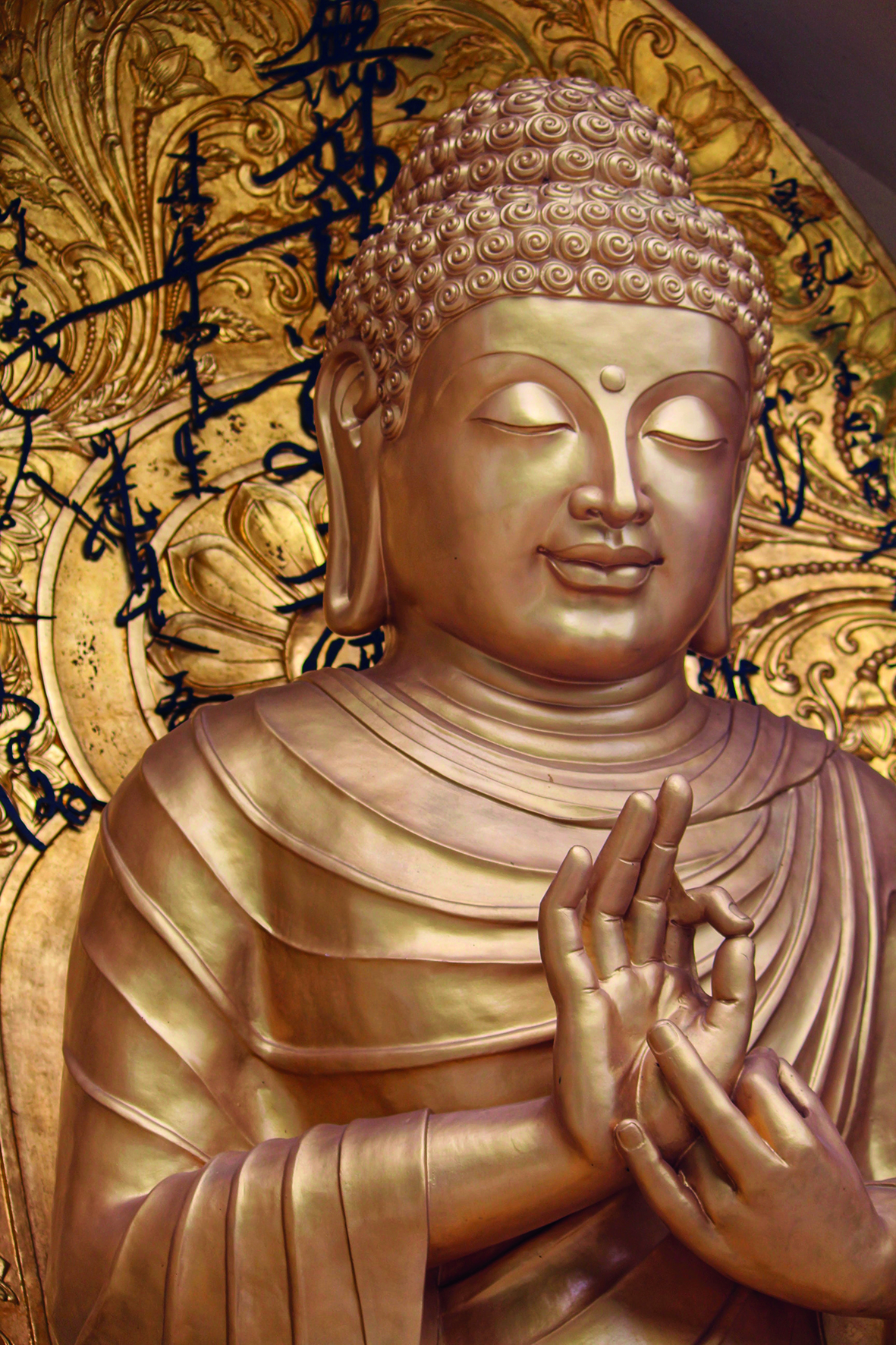
To eliminate desire, according to the Buddha, it is necessary to deny the atman or deny the individuality of self.
The Buddhist doctrine furthermore relates that the things of the world that we daily experience have no independence; that is, there are no particular things as they appear to us through our senses. If the Self has no separate reality and the things of the world, which the Self desires, do not exist independently either, the craving of the Self for those things is but a useless illusion. “Put down desire”, the Buddha exhorts, and thereby attain the state of Nirvana, a peace beyond all understanding.
In these doctrines of the Buddha, the principal application of the personal will is to suppress one’s desires for the pleasures of the senses. In doing so, it is claimed, the individual will avoid the conflicts that come from pursuing these pleasures. Needless to say, however, this cannot be carried out without major disruption to society, especially in our Western world. However, in a more conservative application, it will result in greater self-control or self-discipline.
The Stoic View
The ancient Stoics also advocated a negative peace, that is, withdrawal from the worldly state of mind. The Stoics, the ancient Greek philosophers and the later Roman school, criticised sensual pleasures as being futile, considering them as resulting in distraction from the more important things in life. Seneca, the Roman philosopher, statesman and prominent Stoic, said: “I am seeking to find what is good for man, not for his belly.” The Stoics even believed that the emotions were a sort of disease. Compassion, sympathy and pity were viewed as weaknesses to be overcome, though assistance to people in distress was good, even though emotions should not be involved in that goodness. They took the position that emotions and sensual pleasures centred around desires disturbed the individual’s sense of peace.
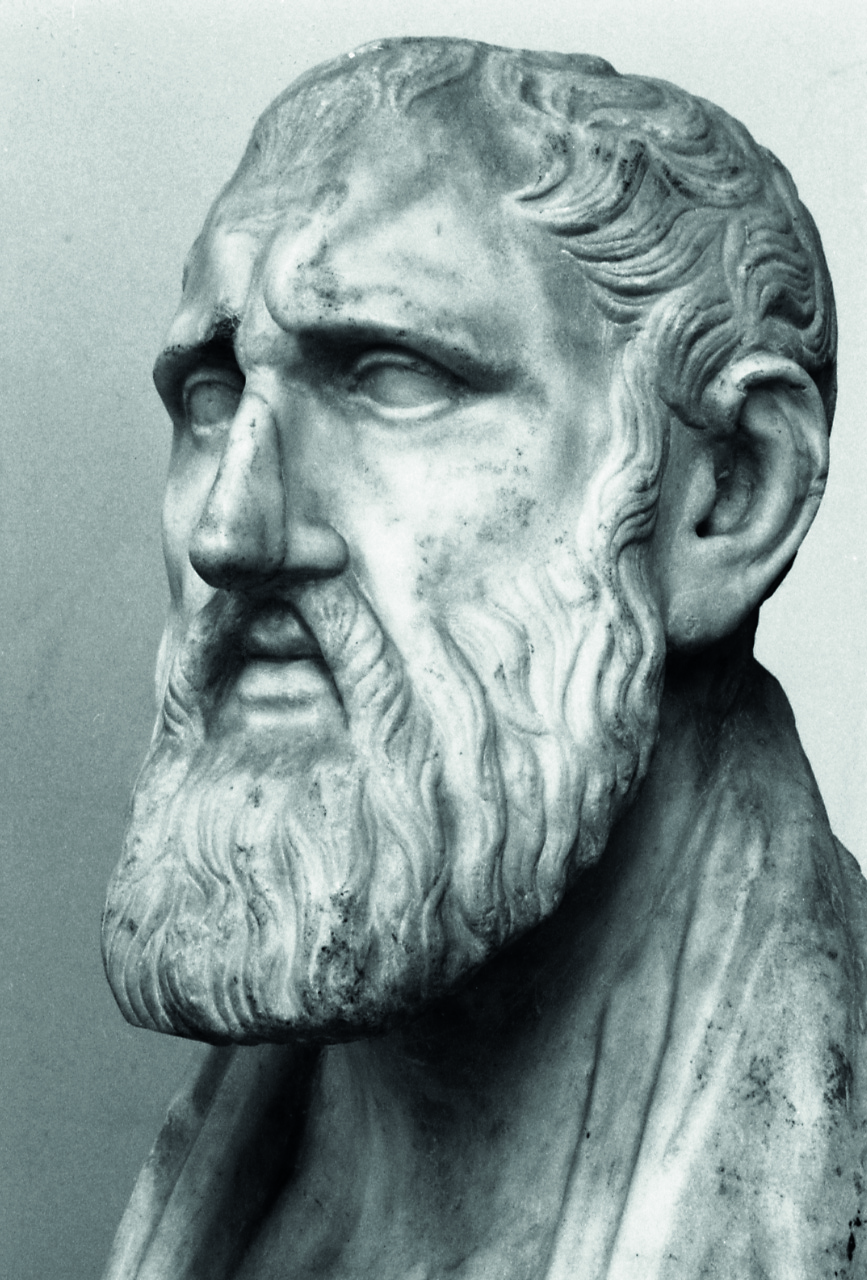
To sum up the Stoic philosophy in connection with peace: happiness and peace were to be found only in imperturbability. This is interpreted as avoiding anything that will perturb us, arouse our appetites or our emotions. But this kind of peace is so negative that it robs us of our dynamic action and initiative. It would not permit us to create anything if such action were to disturb our repose.
Many people also entertain the fallacy that peace is nothing more than ignorance of the future moment. We all know people who don’t care much about planning for the future and, in extreme cases, don’t want to study or acquire any new knowledge. Any such activity is disturbing for them, depriving them of their peace of mind. Such people may be momentarily at peace because they insist on being ignorant of what lies around the corner. But they cannot escape the reality of their existence, a reality which eventually overtakes and descends upon them. At that time its effects are far worse because such people are wholly unprepared for them. Such a philosophy of peace is like closing one’s eyes in the belief that what one can’t see won’t affect one.
The View of Aquinas
Mysticism is often declared today to be so abstract, so idealistic, as to be completely opposed to rationalism. On the contrary, however, mysticism offers the most cogent and plausible approach to individual peace. Thomas Aquinas, the 13th century theologian and philosopher, said:
Peace implies two things: first, that we should not be disturbed by external things and, second, that our desires should find rest in one.
It is the second part of his remarks which is the most important to us. Note that he does not deny the existence of desires, nor is he critical of the fact that people have desires. Rather, he requests that one rests one’s desires in ‘the one.’ This can be interpreted as meaning focusing all our desires in a single impersonal ideal, a superior, transcendental love that constitutes that one of which he writes. It is like the drawing together of the threads of all our lesser desires, the various aspects of ourselves, to serve some superior, exalted end. For analogy, the candleholder and its candle and flame are all combined to bring forth light. The candle and its holder, and even the flame, are finite; they are limited, but the light that comes forth from their combination is infinite in its nature. The light reflects all objects which are exposed to it.

A Practical Approach
We will always have various desires, but the desire for peace must be above all other desires. It must be an all-inclusive desire, one that is Cosmically inspired and surpasses all others in importance. The desire for peace must arise from the depths of the spiritual self and the end of such a desire is not negative. It means more than just avoiding some distraction or conflict; the desire for peace is positive. It is the seeking to bring satisfaction to the whole of humanity.
Referring to peace as ‘intellectual repose’, St Paul also described it as ‘peace in believing.’ From a mystical point of view, this is the submerging of oneself in some ideal that is in harmony with life’s activities and the demands which life makes upon us. In other words, conceive a mission for your existence, a reason why you are here, and then direct your whole self, not just your mental and physical being, towards that conceived end. As a mortal being, you will of course continue to experience certain external distractions and certain rebuffs from the vicissitudes of life. But when you have attained the supreme desire of peace in the spiritual, mystical sense, these rebuffs of life, these distractions, will then be considerably lessened in their effects upon you by the inner certainty and assurance you have attained.

The greatest causes of our anxieties and restlessness are not external forces. The cares and responsibilities that come to us are not necessarily the greatest disturbers of peace. The principal cause of these disturbances which we experience is the feeling of insecurity and lack of independence which we have at times. When we have an ideal which can be related to our inner self, that is, to the evolved self, we are never too deeply disturbed by things of the world. There is always an inner peace, no matter what the turmoil of the day. Self-confidence is born from an assuring knowledge of our inner harmony and free conscience. These are the first requisites of peace. Inner peace, then, is the full activity of our whole being. The various disturbances and distractions we experience are a consequence of insufficiencies of some personal satisfaction. Ignorance is mental starvation; jealousy and envy are emotional starvation; moral degeneration and selfishness amount to starvation of the soul. There is no peace where the self is out of harmony with any source of its supply.
Finally, the symbol of personal peace which we should always keep in mind is a balanced scale. It is never a scale at rest but one a scale that is always active. It is the scale of compensation, of adjustment between the objective and subjective worlds, the finite and the infinite and between unity and diversity.