

MòZĭ: Forgotten Teacher of China
By Allan Tullio | May 02, 2022
This is an extract from The Rosicrucian #88 (May 2022).
North China 400 BCE, the gaunt, dusty man paused briefly and looked up at the royal palace looming before him. The finely dressed townspeople stared disdainfully at his tattered clothes and bloody, rag-wrapped feet. He pushed on, heedless of their stares, for now, after ten days and nights of walking, he had reached his destination. He might yet stop the impending invasion, if only the king would listen to him.
In war, the calamity to the people and the world is great. Yet the rulers enjoy their evil, injuring and exterminating nations. Is this not perversity?1
His name was MòZĭ, and this was only one of many such missions of peace. In honour of his compassion, wisdom and dedication to peace and service to all, he was known to his contemporaries as ‘Master Mo.’ His age was not unlike our own, a time of war and upheaval, a century that saw the map of China, a collection of warring states, redrawn many times as larger states swallowed up smaller ones. That period of China’s long history was marked by political anarchy, constant warfare between competing states, and general social and moral degeneration.
MòZĭ’s own birthplace, the small state of Sòng, was considered fair game by its larger neighbours, and the memories of a terrible time, centuries before, when the natives of the capital city were reduced to cannibalism by a long siege, lingered even into MòZĭ’s day. Out of the strife and chaos of a dark night can arise an earnest desire for greater understanding, a desire to return to a constructive society based on the ideals of peace, justice, and harmony.

The rough terrain of the state of Sòng.
The great thinkers of that calamitous age sought answers to end China’s long anguish. Amidst the violence and confusion of that paradoxical age there came into being the ‘one hundred schools of philosophy’, each one seeking answers to the burning questions of the time:
How can incessant warfare be ended? How can lasting peace, happiness, and stability be achieved?
The Confucianist Answer
Confucius (551-479 BCE) was one of those thinkers who struggled with the great questions of how to reconstruct society. His answer was to convince the rulers of each state to emulate the wise and virtuous kings of China’s deep and ancient past. The people would then emulate their own rulers and all would cultivate courtesy and kindliness, respect for the elderly, veneration for the dead, and practise elaborate ceremonies and music.
The Confucianist system infused the political and social institutions of China with concepts of moral order. Through a process called the ‘rectification of names’ Confucius established a system of moral and ethical standards governing all actions in society. In the confusion of the 6th and 5th Centuries BCE in China, this new system of moral order was revolutionary, attempting to bring order out of chaos.
MòZĭ was born into the generation immediately following Confucius’ death and was educated by disciples of that great teacher. As a child he learned by heart all the great books of China’s rich intellectual past. He learned to deeply revere his parents and ancestors, to obey without question his superiors, to be courteous to all, but to love his own family more than anything else.
MòZĭ Questions the System
Even as a young student however, the inquiring mind of young MòZĭ began to reach out beyond Confucianism for answers to his many questions. While he revered Confucianism for its constructive qualities, he raised many questions regarding some of its particular concepts. He eventually came to the realisation that the Confucian ideal of ‘partial’ love, love of one’s own family and country above all others, was part of the problem of interpersonal and international disharmony.
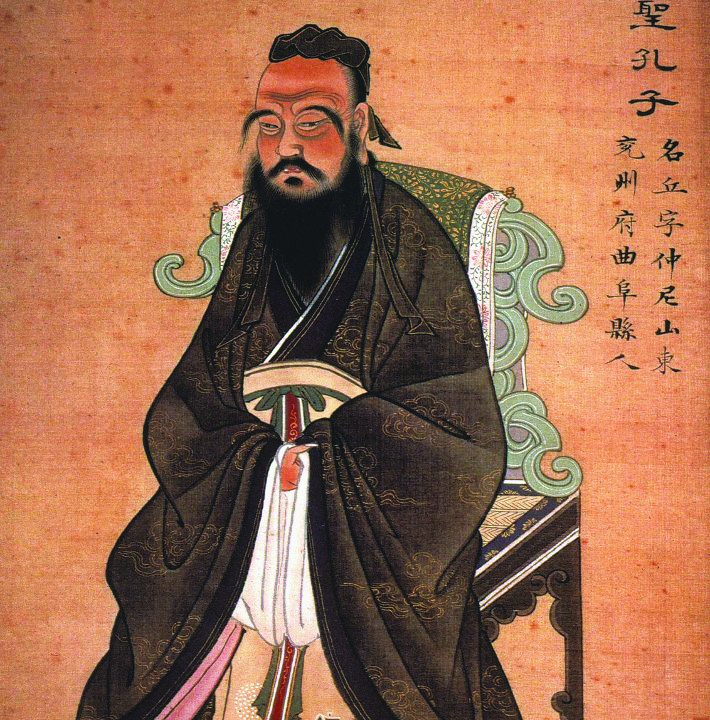
Confucius, by Qiu Ying (1494–1552)
All the calamities, strifes, complaints, and hatred in the world have arisen out of want of mutual [universal] love.2
Thus universal love, love for all without distinction, became the heart of MòZĭ’s message to humankind, the foundation upon which he hoped future generations would build an era of peace, security and happiness. Universal love was, simply put, the ability to...
...regard the state of others as one’s own, the houses of others as one’s own, the persons of others as one’s self.3
MòZĭ became an itinerant preacher, travelling about the troubled countryside spreading his gospel of love. He attracted many followers like himself who were striving for peace and organised them into a closely knit, well-disciplined band, well versed in his teachings and prepared to follow him into danger, even at risk to their lives. And he did indeed put their lives and his own life at risk on many occasions.
On one occasion, MòZĭ learned that the large state of Chû was planning to invade his native state of Sòng. The king of Chû was urged on by an opportunistic court strategist who had designed a secret weapon called ‘cloud ladders.’ These, he was sure, would guarantee the invasion’s success. MòZĭ summoned his courage and travelled to Chû, where he gained an audience with the king. The meeting was tense and the philosopher used all the arguments he knew in an attempt to dissuade the king from his plans: War is morally wrong, war is wasteful, war is destructive to both victor and vanquished, it is against Heaven’s will. But all these arguments were to no avail, for the king was already convinced of the outcome of his aggression.
The Brave Philosopher
MòZĭ then changed his tactic. Taking off his belt, he laid it on a table and shaped the belt into a rough square, resembling the walls of a city. He then called upon the ‘cloud ladder’ strategist, Gongshu Ban, to attack his little ‘city’, while the philosopher would defend it against all the invader’s stratagems, using a small stick as his only weapon. With the fate of his own state of Sòng hanging in the balance, MòZĭ skilfully turned back all attacks, completely frustrating his opponent.
Refusing to accept defeat, the embarrassed Gongshu Ban revealed:
I know how you could be defeated, but I won’t tell you.
To this, Master Mo calmly replied:
I know what you have in mind, but I won’t tell you either.
The ruler of Chû asked what it was and Master Mo replied:
Gongshu Ban thinks that if I were murdered, there would be no one to defend Sòng. But in fact, three hundred of my disciples..., supplied with all my implements of defence, are at this moment waiting on the walls of Sòng for bandits from Chû. You may murder me, but you cannot get rid of them.
To this the ruler of Chû said:
Very well, let us therefore cease all thoughts of attacking Sòng.4
And so, it is said, Sòng was saved for the moment, and the contingent of 300 of MòZĭ’s followers, waiting on the walls, were called back. However, it was their duty to remain ready to march at a moment’s notice if ever war threatened again. The brave philosopher’s impartiality mandated that his disciples be ready to defend any state about to be unjustly attacked. If the king of Chû had called MòZĭ into service to prepare the defence of that state from aggression, he would have served that cause.
A Guiding Principle
Behind all of MòZĭ’s actions was a single principle: promote welfare; remove evil. To do this he examined each situation with an eye for the greatest good for the greatest number of people. Today we would perhaps call this utilitarianism.
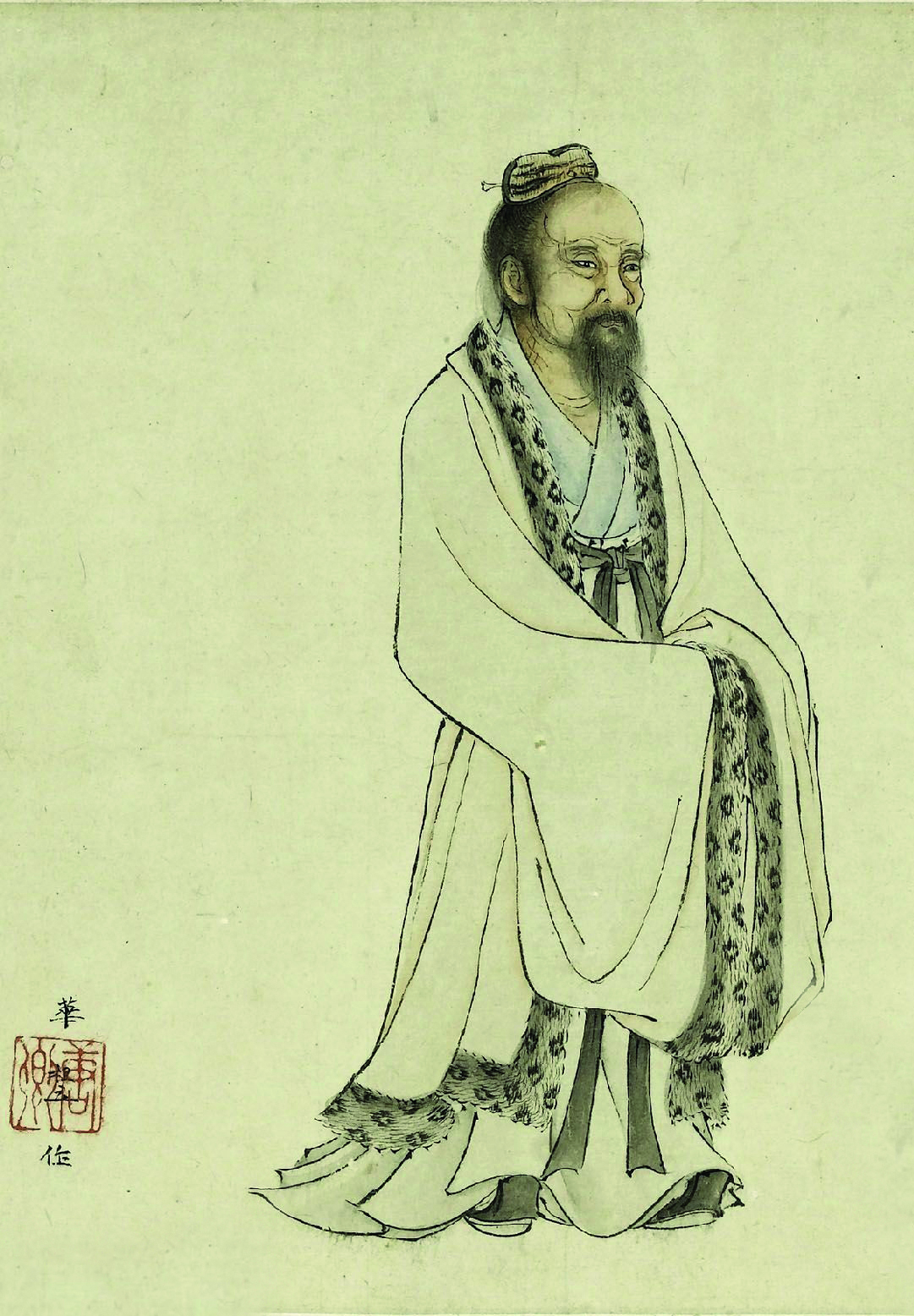
Zhuāngzĭ
While MòZĭ’s peace activism may seem contemporary enough for us, it was another of his ideas that startled later Christian missionaries arriving in China more than two thousand years after the philosopher’s death. MòZĭ believed in a loving, universal god who watched over the world with great sorrow at his creation’s unloving ways. This god, the foremost of the Chinese pantheon, was called ‘Heaven’, and Heaven he said...
... desires people having energy to work for each other, those knowing the way to teach each other, and those possessing wealth to share with each other.5
In terms that seem to foreshadow the Christian message, MòZĭ concluded:
Now Heaven loves the whole world universally. Everything is prepared for the good of man. Even the tip of a hair is the work of Heaven. Substantial may be said to be the benefits that are enjoyed by man. Yet there is no service in return. And they do not even know this to be unmagnanimous and unfortunate.6
MòZĭ urged that man return the service of his creator by following the Will of Heaven and loving all without distinction.
In MòZĭ’s depiction of a loving creator god, he was unique in China’s long roll of eminent thinkers. Indeed, he has been called China’s first true ‘religious’ teacher, because he so closely approached what the western world recognised as religious thinking. But he was no monotheist. For MòZĭ and most other Chinese thinkers, the celestial realms were peopled by a vast assortment of deities and spirits worthy of respect, awe and sacrifice. Among his contemporaries, MòZĭ was more attentive to the invisible world than most others, though all agreed that pleasing and placating spirits was an important way of keeping one’s life safe and the world in harmonious balance. Like the ancient Egyptian imperative to uphold at all costs the rule of Maat (truth, right order, right action), so too was there a Chinese imperative to keep the universe [the world] in a state of delicate harmony between opposites.
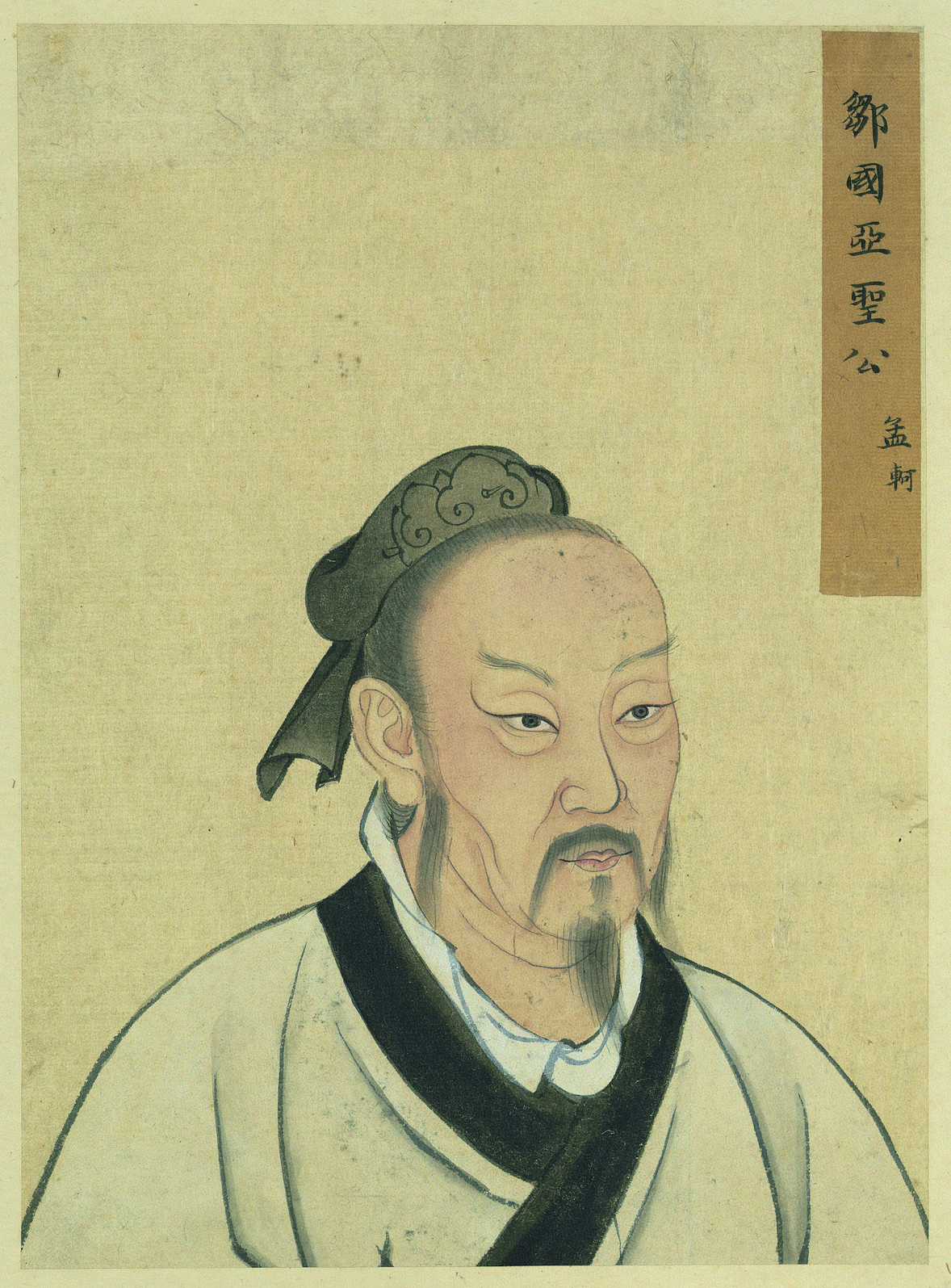
Confucian philosopher Mencius was one of several critics of Mozi
Despite the controversy his ideas created among China’s intellectual community, MòZĭ’s philosophy struck a responsive chord with many. During his lifetime, he gained thousands of followers, and his ideas continued to sway many more after his death. For perhaps a century his school rivalled that of Confucius in popularity. The ‘Mohists’ (followers of MòZĭ’s teachings) lived simple, stoic lives, sacrificed to a loving Heaven, treated all people respectfully, and endeavoured to put the principle of universal love into practice. They read the great Chinese histories assiduously to learn of the Will of Heaven from the actions of the ancient emperors, and they learned all the skills of defence so carefully developed and taught by MòZĭ in order end all wars.
His critics argued that his lifestyle was unnatural and far too difficult for the average person to follow. In the words of another of China’s great sages, Zhuāngzĭ, the Taoist mystic:
Men want to sing but he [MòZĭ] condemns singing; men want to mourn but he condemns mourning; men want to enjoy music but he condemns music. Is this truly in accord with man’s nature? Any teaching that would have men toil through life and be content with a bare funeral at death is too austere. It makes men sorrowful and dejected. Its practise would be difficult. It is contrary to human nature and few people can stand it.7
There may be much truth to Zhuāngzĭ’s criticism as witnessed by the fate of Mohism in China. Although serious rivals of the Confucianists in the century after their master’s death, the Mohists were completely eclipsed shortly thereafter. Their difficult path of love, simplicity and devotion to Heaven and man that MòZĭ had hoped would lead to a peaceful, prosperous, and populous China, was far too steep for most people to follow. Confucianism regained its prominence, and was only barely relinquishing during the long and harsh rein of Chairman Mao after the conclusion of the Second World War.
The well-known 20th Century Chinese writer Lin Yutang conjectured on the disappearance of MòZĭ’s teachings:
Persecution could not do it and there was no report of persecution. One explanation is the rise of Mencius, who powerfully combated its influence. Another explanation is that the Han Emperors made Confucianism into almost a state religion. A very possible explanation is that the warrior evangelists simply perished in the wars of the First Emperor of Qín. Which brings us to the truest explanation: Quixotic heroism and extreme altruism did not appeal to the native Chinese common sense.8
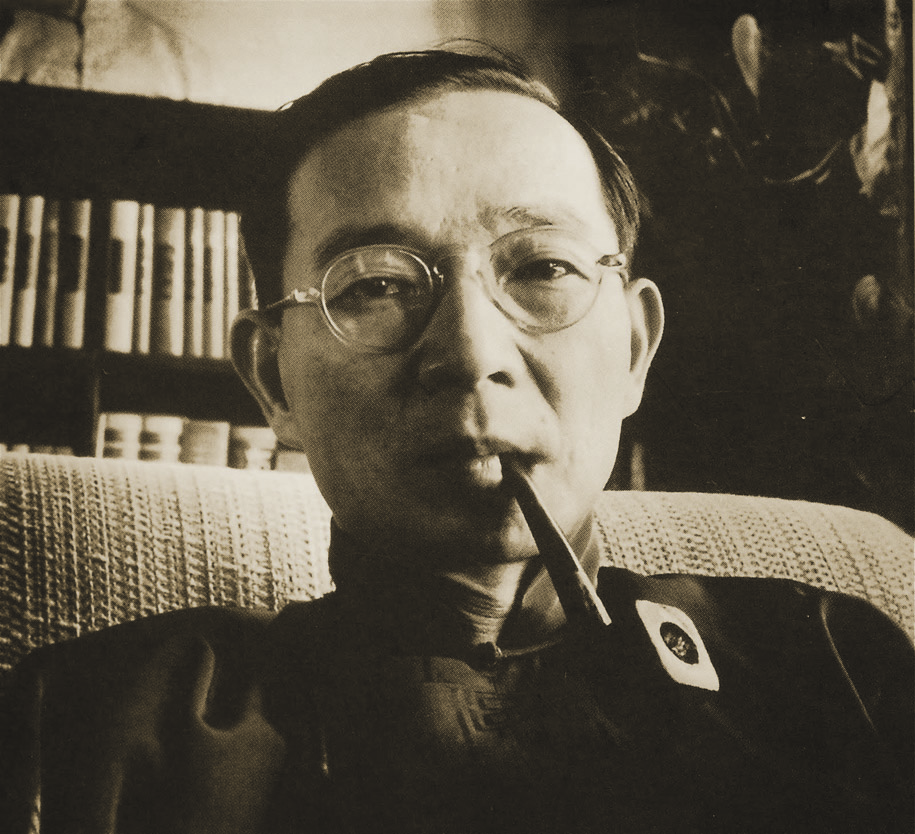
Lin Yutang
So complete was the Chinese rejection of MòZĭ that his book of teachings was neglected until the 20th Century and all of its ancient commentaries are lost. To gain an estimation of MòZĭ from a close contemporary, I turn again to the Taoist Zhuāngzĭ, who while rejecting MòZĭ’s teachings, still had lavish praise for the man:
Mo Tzu was a truly fine man, of whom only too few are to be found. Despite all personal hardships, he held fast to his ideal, a man of excellence indeed!9
Footnotes
- Lin Yutang, The Wisdom of China and India (New York: The Modern 2. Library, 1942) p. 801.
- Ibid., p. 794.
- Ibid., p. 795.
- H.G. Creel, Chinese Thought from Confucius to Mao TseTung (Chicago: The University of Chicago Press, 1953) p. 55.
- Lin, op. cit., p. 803.
- Ibid., p. 804.
- William Theodore De Bary, ed., Sources of Chinese Tradition, Vol. 1 (New York: Columbia University Press, 1960) p. 80.
- Lin, op. cit., p. 787.
- De Bary, op. cit., p. 81.