

Scepticism & Positive Thinking
By by Laura Kacoutié | Feb 01, 2021
This is an extract taken from The Rosicrucian #83 (Feb 2021)
We’ve all heard of the phrase “Be realistic!” It’s not a foreign concept in today’s age to carry a healthy level of scepticism. We live in a society where evidence and concrete findings are favoured. Gone are the days when someone can simply sell us a few amazing claims and expect us to blindly nod and go along with it. A lot of us have questions, we want proof. Before we believe, we are susceptible to doubt.
In this sense, many of us have heard about positive thinking before. We can all agree that adopting a positive frame of mind, adopting a positive attitude and expecting good results in all we do sounds good in theory. But then in our personal lives and when applied to ourselves, the spark may fade after a while. We encounter obstacles, we may find it difficult and we lose motivation. Certainly, along our journey we become increasingly sceptical.
The inner sceptic will ask: “Can this really work?” “Can I do it?” “Am I being realistic?” It’s not shameful or embarrassing to admit that each of us has this inner sceptic, and it’s natural to ask questions when trying new things. However, our scepticism can prevent us from embracing positive thinking and the benefits it provides us altogether. Therefore, how can we keep a balance and ensure that our scepticism does not shut us out from the happiness and fulfilment we deserve?
Keeping a Balance
There is a saying that too much of something is not good for us. The inner sceptic likes to be sensible and rational. Therefore, applied to our thoughts, it is easy to conclude that there should be some form of balance to keep us in check. Clearly, dwelling in negative thoughts all the time is of no benefit to us. For our health, our outlook on life, and for our general wellbeing, a constantly negative frame of mind can be very damaging. So, the balance should not be tipped on the side of negative thinking. Yet it may be possible to argue that one can also be too positive. What comes to mind when we think of someone who is always so positive? Perhaps it is someone who is a bit naïve or out of touch with reality.
In everyday life, we can always think of someone who has defied the odds, or has done the impossible.
Therefore, our inner sceptic attempts to brings us some grounding. It balances out the pessimist in us but also stops us from being blindly optimistic. In the abstract, this balancing scale makes sense, but when applied to real life scenarios there are always exceptions that make us rethink the rule.
In everyday life, we can always think of someone who has defied the odds, or has done the impossible. To use a few famous examples: Stephen King’s first novel was rejected by over 30 publishers but he is now one of the best-selling authors of all time. Oprah Winfrey was once fired from her job because she was “unfit for television” but then went on to host the highest-rated television programme of its kind in history. Additionally, there are even claims that Einstein couldn’t talk properly until the age of four. Would it have been realistic to think at that time, that Einstein’s name would be synonymous with the word genius, or that any of these people would have been successful at all? Based on these examples and the countless others that are less documented, we cannot claim to know what is realistic in every given circumstance.
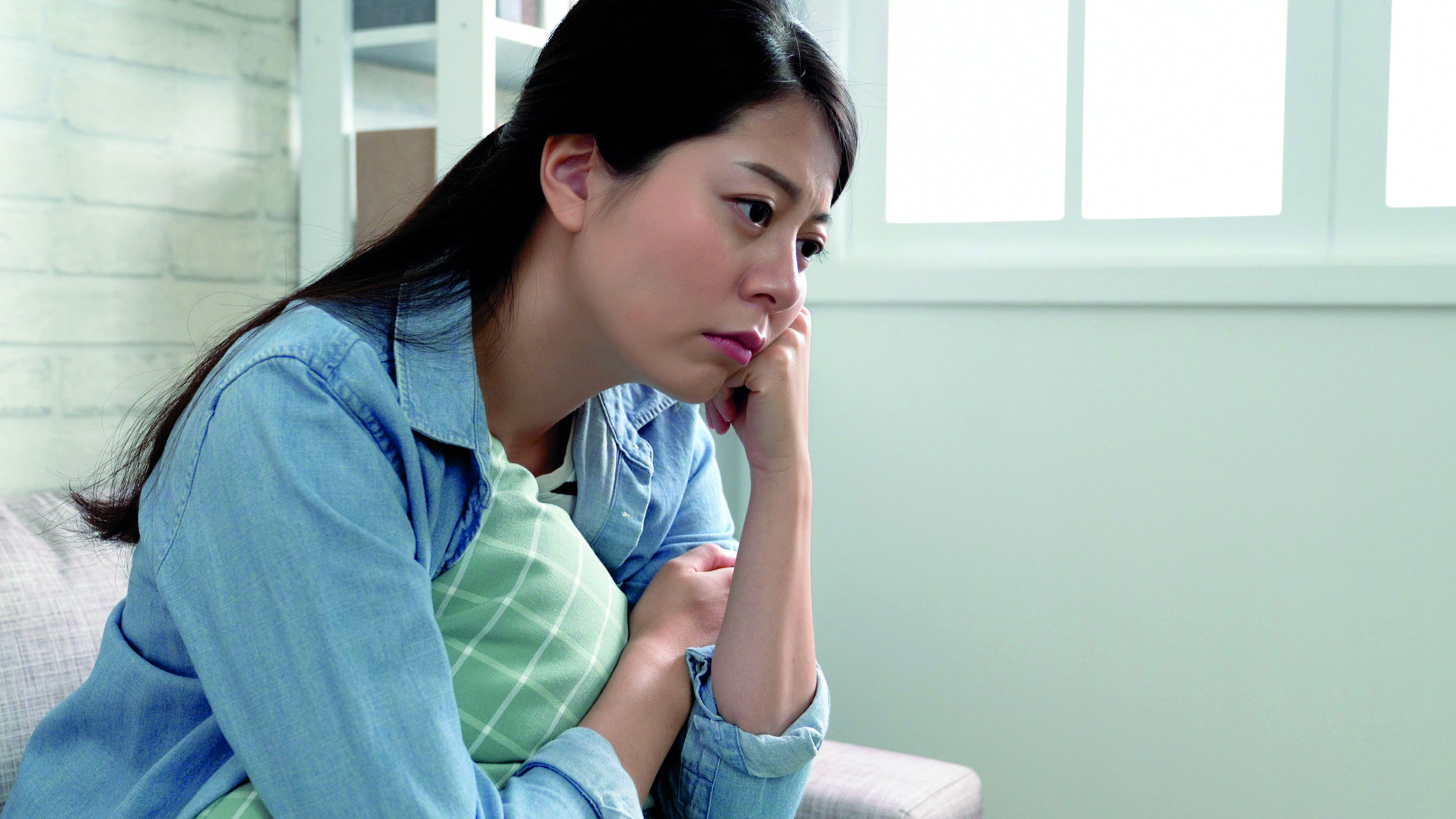
Positive Thinking is Freedom!
The desires, ambitions and positive outlook we wish to achieve by using positive thinking do not need to be modified simply because our inner sceptic does not understand how it can fit into our reality today. This is because the joys and the benefits that are achieved by thinking positively are completely beyond the limitations that our inner sceptic may place on ourselves.
The inner sceptic may find it more appealing to rely solely on the intellect or our objective senses as a way of understanding ourselves and what is possible in the world today, as this way of knowing is more widely accepted; it is safer and tested. But does this way of knowing actually give us infallible knowledge in the first place?
Every so-called failure holds within it a rich learning experience and can make us much more resilient in the process of attaining what we want.
Even with our five senses and our powerful intellect we have not discovered everything about the universe - the periodic table still has unknown elements, new planets are being discovered and we are constantly researching new ways to do things and new ways to understand the world around us. Indeed, relying purely on our intellect or on what we believe to be realistic has its limitations. Therefore, when we choose to think positively we should allow ourselves to go beyond our intellect. We can open ourselves up to another way of knowing that is not subject to the same constraints, an innate way of knowing what is deep within us waiting to be reclaimed. It is the certainty that what is for us shall be ours, and that all that belongs to us is good. It is trusting that our needs will be wonderfully met in every single way and that they will continue to be met throughout our lives as long as we place ourselves in a position of receptivity to the universe and to life.
Placing ourselves in this position of receptivity means we need to loosen our grip of the limited ideas of what is ‘realistic’ in today’s world especially since we cannot claim to have an absolute understanding of the universe or of all that is possible.
This explanation may still appear to be unrealistic to the inner sceptic. Yet we cannot deny that if we choose to adopt this positive frame of mind and place ourselves in this position of receptivity, we can find ourselves doing the seemingly impossible. However, those that allow their inner sceptics free reign, will observe us and eventually concede that our actions were indeed miracles or perhaps that we were just lucky. The very things that they deem unrealistic can be observed taking place in our lives.

Hopeless Optimism?
However, this is not to say that the intellect and spirituality are at odds or that there is no place for the intellectual at all. Humans are multi-faceted; the fact that we have the capacity to rationalise and use our intellect means that it does have a place in our lives.
Positive thinking does not mean completely shutting away any rationality or intellect. This is not a question of being a hopeless optimist who ignores science and abdicates all reasoning. There are laws that science has revealed that positive thinking alone cannot bypass. For example, we can’t ignore gravity and float off into the sky and we can’t make a pot of gold appear out of nowhere.
We are an evolved species and have discovered many laws of our universe that we should use to our benefit. We can always find a way to compliment the different ways of knowing; we can use all tools of knowing to understand the world and ourselves. A builder, for example, does not rely only on one tool to create a house.
What is Holding You Back?
It may be worth analysing what is really behind our scepticism when it comes to positive thinking. How much of our scepticism is due to fear? Perhaps we are afraid of adopting a positive frame of mind because if we do, and then our ambitions fail or we face obstacles, it hurts us much more. We find it harder to try again or to stay motivated.
However, we must understand that obstacles and so-called failures are not the end of our journeys or our ambitions. Every so-called failure holds within it a rich learning experience and can make us much more resilient in the process of attaining what we want.
Adopting a positive mindset can be a long and arduous task ...There is an underlying current within us that wants us to find happiness.
Also, synonymous with scepticism is doubt. We doubt that we can even adopt a positive frame of mind all the time or that it will make much of a difference to our lives. The strongest way to appease our doubts surrounding positive thinking is to simply put into practice this powerful tool and see what difference it will make in helping us achieve what we want. The adage of “try it and see for yourself” truly resonates, as positive thinking is a practical exercise that requires real work and commitment.
It in no way involves being disingenuous or dishonest with the way we are feeling. There will be days when we feel discouraged or find it hard to see a silver lining when obstacles come our way. But this does not mean we must give up, or even suppress any discontent at all. Positive thinking involves adjusting our reaction to the setbacks. In this way, it involves being mindful of what our thoughts and reactions actually are to the circumstances and then choosing to mould them into more positive and constructive ones.
Therefore, when it comes to negative thoughts, we need to examine how we truly feel about a situation and then like a loving friend, parent or partner we offer ourselves understanding and love. In this way, we can find out what is genuinely causing us to feel this way and give ourselves the opportunity to truly heal instead of suppressing it inside.

Choose Positivity
Adopting a positive mindset can be a long and arduous task especially in a world that can be highly stressful and increasingly sceptical at the same time. Nonetheless it is truly rewarding. There is an underlying current within us that wants us to find happiness.
Nearly all we do in life is to secure happiness - the jobs we pursue, the partner we seek, the environment we want to be in - we select many of those things based on what will make us happy. Therefore, why not keep our focus on positive thinking to create a harmonious worldview that can only work in our favour?